Purriko Refrigerator Deodorizer Review: Baking Soda Killer?
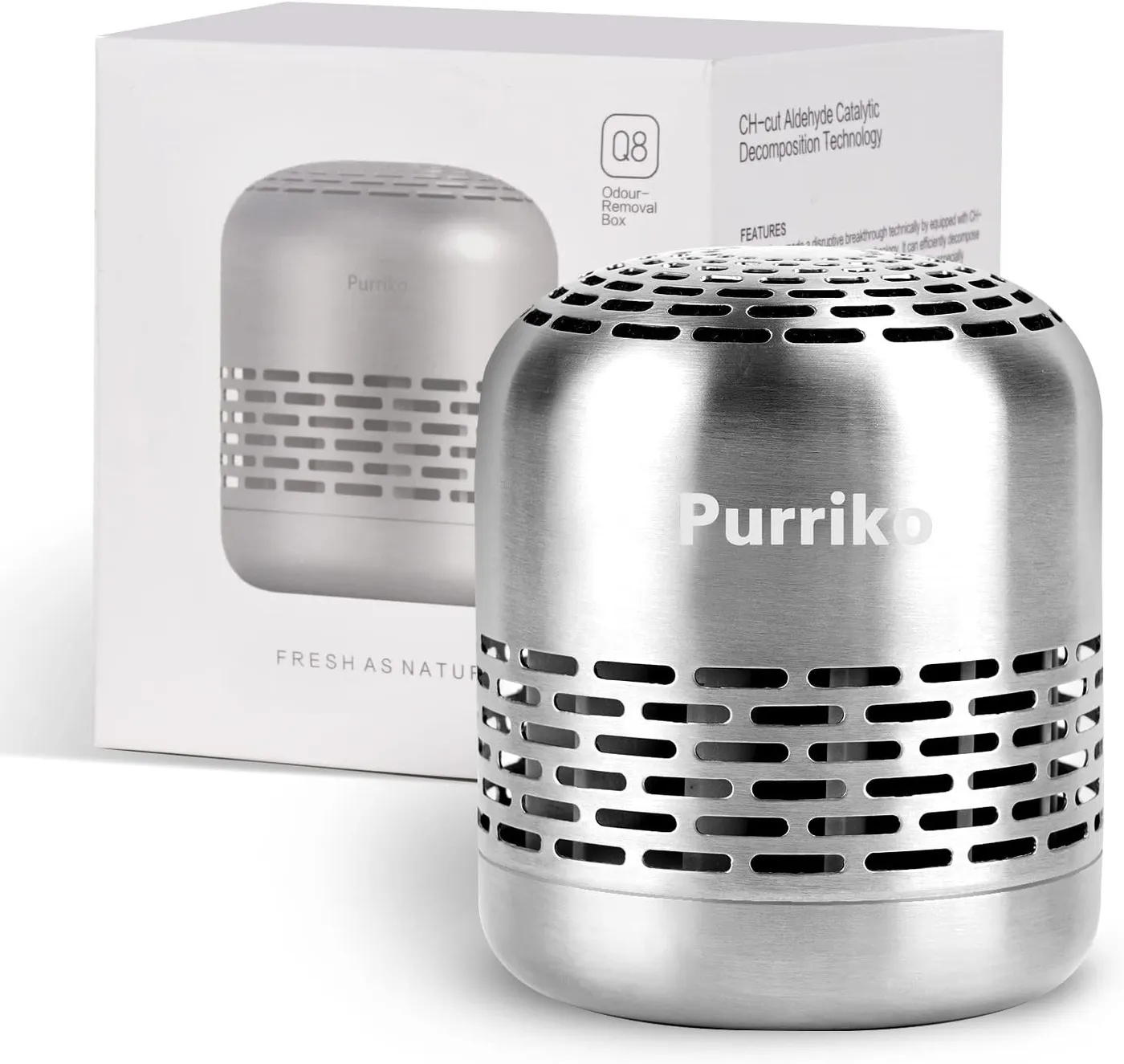
A legitimate upgrade over baking soda that clears strong fridge odors fast
Ever stood at an open fridge with a baking soda box in hand, wondering why the smell still won't budge? The Purriko Refrigerator Deodorizer is aimed squarely at you. This compact stainless steel cylinder promises to do something different from traditional absorbers. Rather than trap odor molecules, it decomposes them. For most buyers, it delivers on that promise within the first few days. The catch is the 10-year lifespan claim. Real-world data doesn't back it up. And a meaningful minority of buyers see no effect at all. Worth it? For most, yes — with caveats.
How the Purriko Refrigerator Deodorizer works
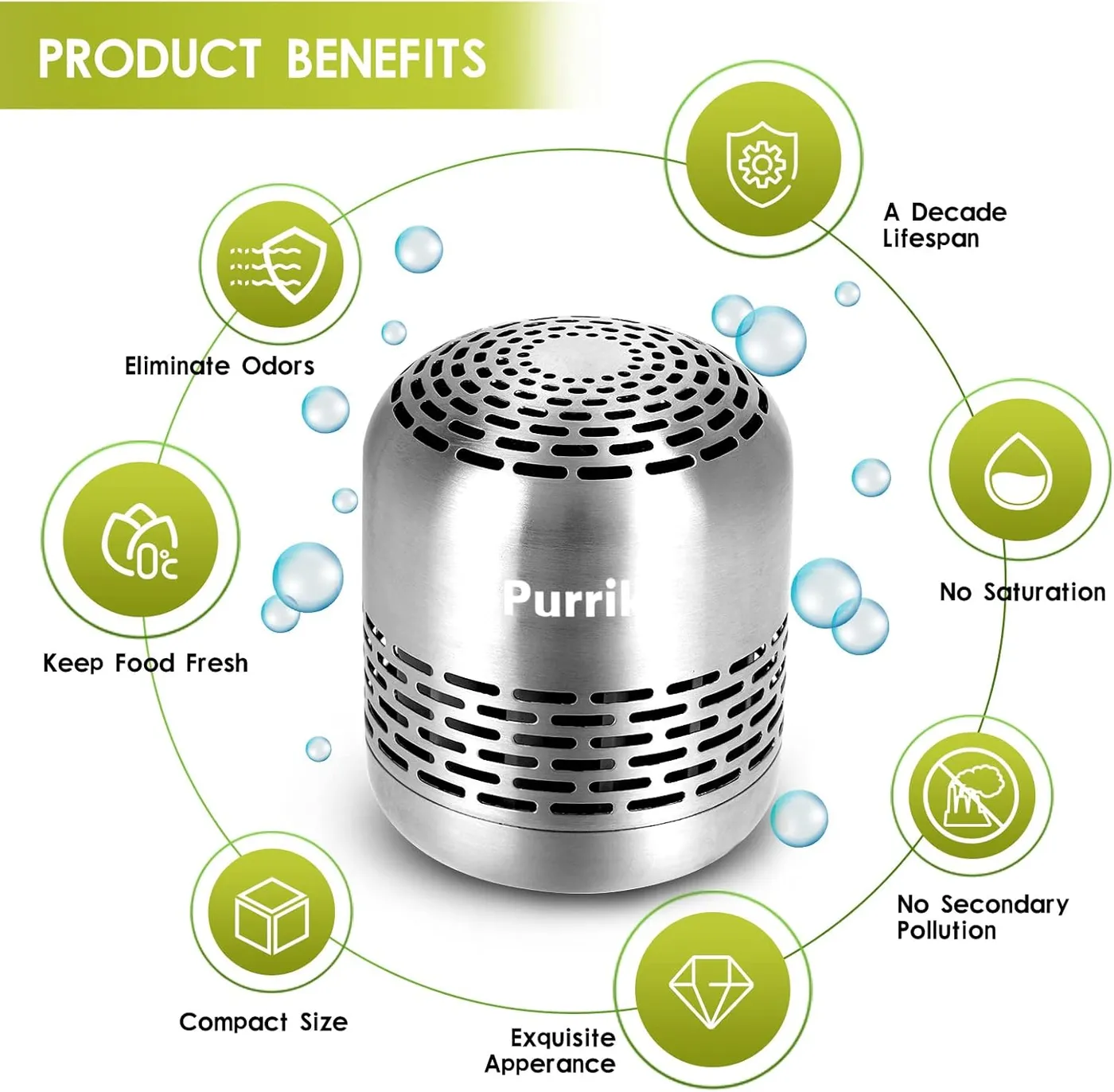
Most fridge deodorizers work through passive adsorption. Baking soda, activated charcoal, and bamboo bags all share the same mechanism. Odor molecules stick to a porous surface until the surface runs out of capacity. The Purriko Refrigerator Deodorizer uses a different approach. Its CH-cut catalytic decomposition technology breaks down volatile compounds at the molecular level. That's the feature the entire product is built around. In principle, the unit doesn't saturate the way an open box of baking soda eventually does.
In practice, the difference shows up within the first 24 hours for most households. Mildly unpleasant fridges shift from noticeable to unnoticeable overnight. Leftovers, cruciferous vegetables, and strongly flavored produce all stop announcing themselves when the door opens. Place it next to cabbage leftovers, kale salad, and strawberries at the same time. All three smells disappear together. That kind of non-selective performance is something baking soda doesn't deliver. Baking soda muffles — it doesn't erase. It tends to pull from the background notes rather than the sharp ones.
The hardware itself has no power source and no batteries. There's no setup app and no moving parts. You take it out of the box, place it on a shelf, and that's the installation. For a category dominated by cardboard boxes of baking soda for decades, the simplicity is the pitch. The absence of any setup ritual is a real product feature.
Real-world odor performance
The impressive thing about the Purriko Refrigerator Deodorizer isn't that it handles everyday fridge odors. Any cheap absorber can dampen those. What matters is that it reliably handles the hard cases. Fish smells strong enough to reach the living room. Spilled crab-leg juice in drawer crevices. Mystery rotten smells that survived a full fridge cleaning. All of these get cleared within hours to overnight. The shift from 'something is very wrong in here' to 'this fridge is fine' happens in a single night. That's the moment that makes the product worth recommending.
It also works outside the fridge. Placed on a toilet tank, it noticeably improves bathroom odors. Near a kitchen trash can, it cuts back on the low-grade food-waste smell between bin emptyings. In microwaves, it clears lingering smells from stubborn cooking. In linen closets, it handles mustiness in otherwise closed spaces. Moving from a single unit to multiple for different rooms is a common trajectory. That's an unusual pattern for a deodorizer — most of these products get bought, tried once, and forgotten.
Performance isn't universal, though. Roughly one in five units shows no improvement at all, even after other odor sources have been removed. A few arrive with a strong, unpleasant smell of their own out of the box. The cause isn't clear — manufacturing variation, humidity exposure in shipping, or genuine defect are all plausible. But the pattern is large enough to factor into the verdict.
The 10-year lifespan claim
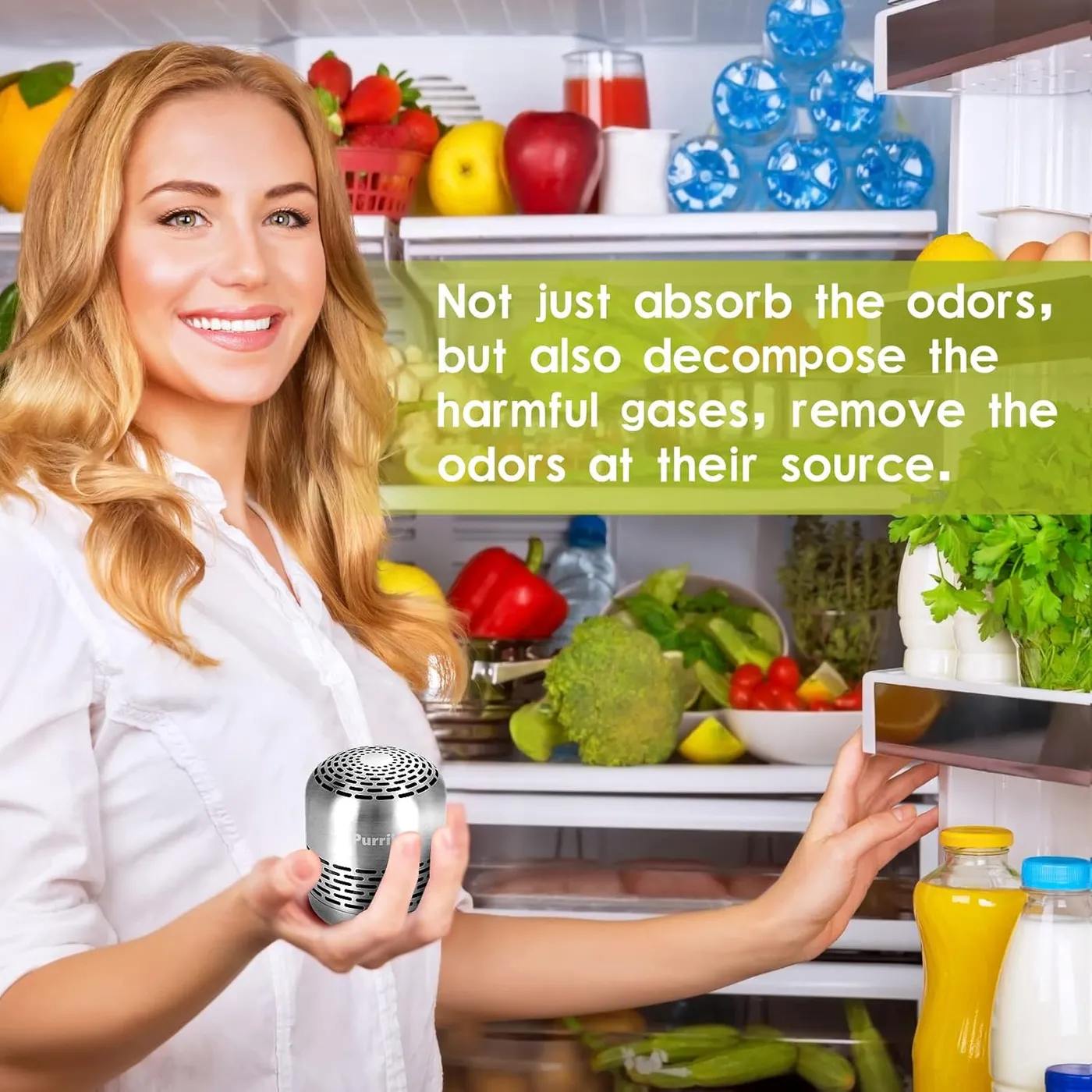
The headline marketing claim on the packaging is a 10-year lifespan. No replacement. No recharging. This is where the Purriko Refrigerator Deodorizer's story gets complicated.
The 10-year claim doesn't hold up under long-term use. Units commonly lose effectiveness at three months, seven months, or one year. A particularly sharp year-one failure pattern is common. The unit works well through its first twelve months. Then one morning the fridge door opens and every odor it ever absorbed seems to come back at once. Others show a more gradual decline that's harder to pin to a single date. But the common thread stays the same. Effective life lands closer to one or two years than a full decade.
The unit sometimes starts to smell bad itself as it ages. That pattern makes mechanical sense. If the catalytic surface eventually saturates with what it's been breaking down, off-gassing is the natural endpoint. The unit is fully sealed, so there's no way to refresh, clean, or open it. Once effectiveness drops, replacement is the only option.
That changes the value math significantly. A replacement every 12 to 18 months is still worth it compared to monthly baking soda changes. Total cost of ownership stays lower than a bamboo-charcoal subscription. But it's not the once-a-decade purchase the box suggests. Buy it expecting to set it and forget it until 2036, and you will be disappointed. Buy it expecting a one-to-two-year run with a realistic shot at longer. The math still works out favorably against every alternative.
Design, size, and placement
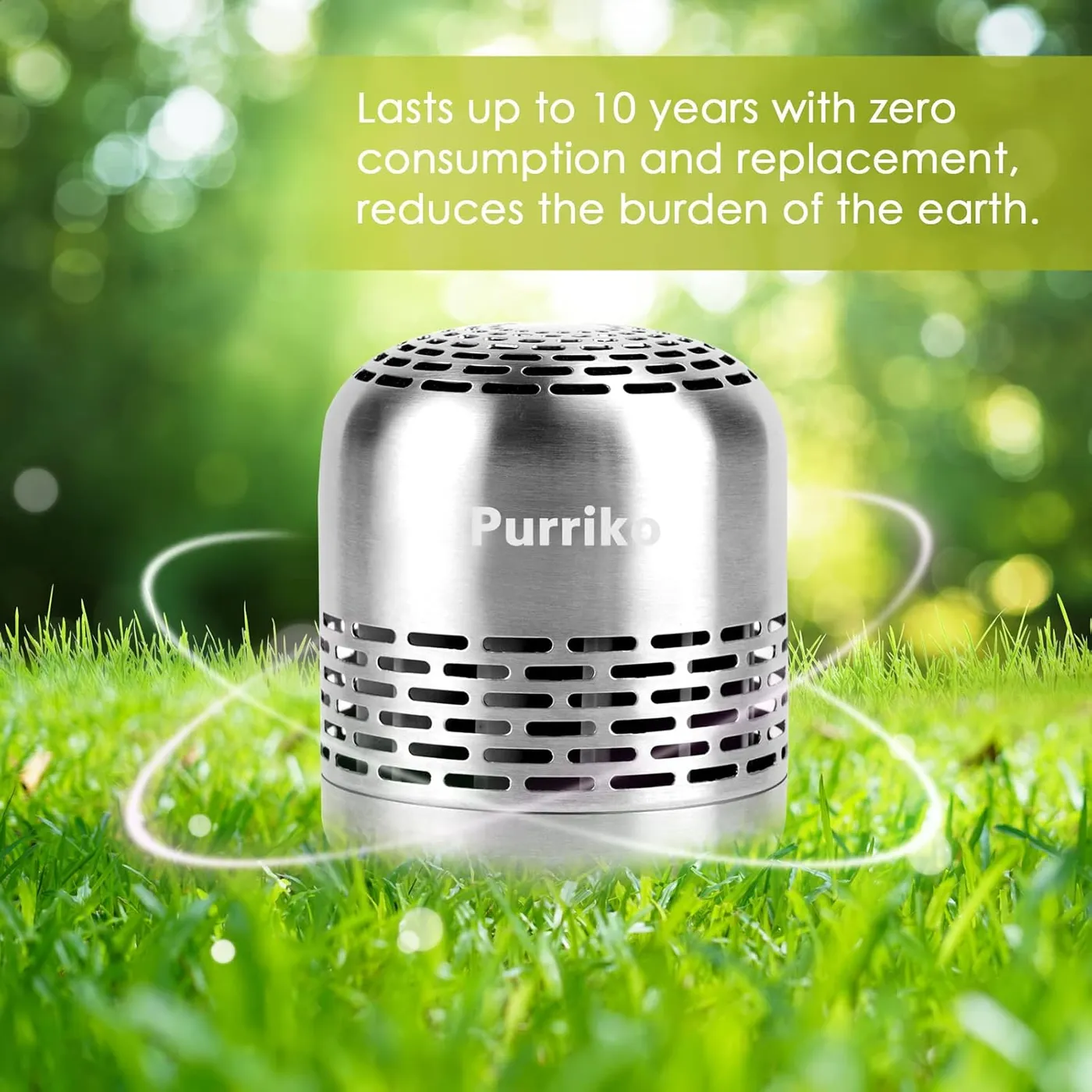
Design is a quiet strength. The Purriko Refrigerator Deodorizer is a compact stainless steel cylinder. It measures roughly 2.7 inches wide and 3.1 inches tall. A perforated mid-section exposes the catalytic core. It's small enough to slip onto almost any fridge shelf without competing for space. And it looks substantially better than an open box of Arm & Hammer. The aesthetic often ends up on display rather than tucked behind jars and condiments.
The absence of moving parts, batteries, or an app works in its favor for daily living. Nothing to charge. Nothing to replace monthly. No connectivity failures to troubleshoot. For households trying to reduce smart-device fatigue, the analog approach genuinely beats the connected one here. There is no version of a connected fridge deodorizer that would add real value over what this unit delivers passively.
One minor usability note: there's no twist-to-activate step, no cap to remove, and no film to peel. The unit works straight out of the box. The absence of any activation step can itself cause confusion. Expecting a twist, peel, or cap and finding none can lead to the false conclusion that the unit is defective. The packaging could do a better job of saying nothing needs to happen after placement. That's a small documentation issue, not a product flaw. But it's worth knowing before hunting for a missing step.

Value versus baking soda and bamboo bags
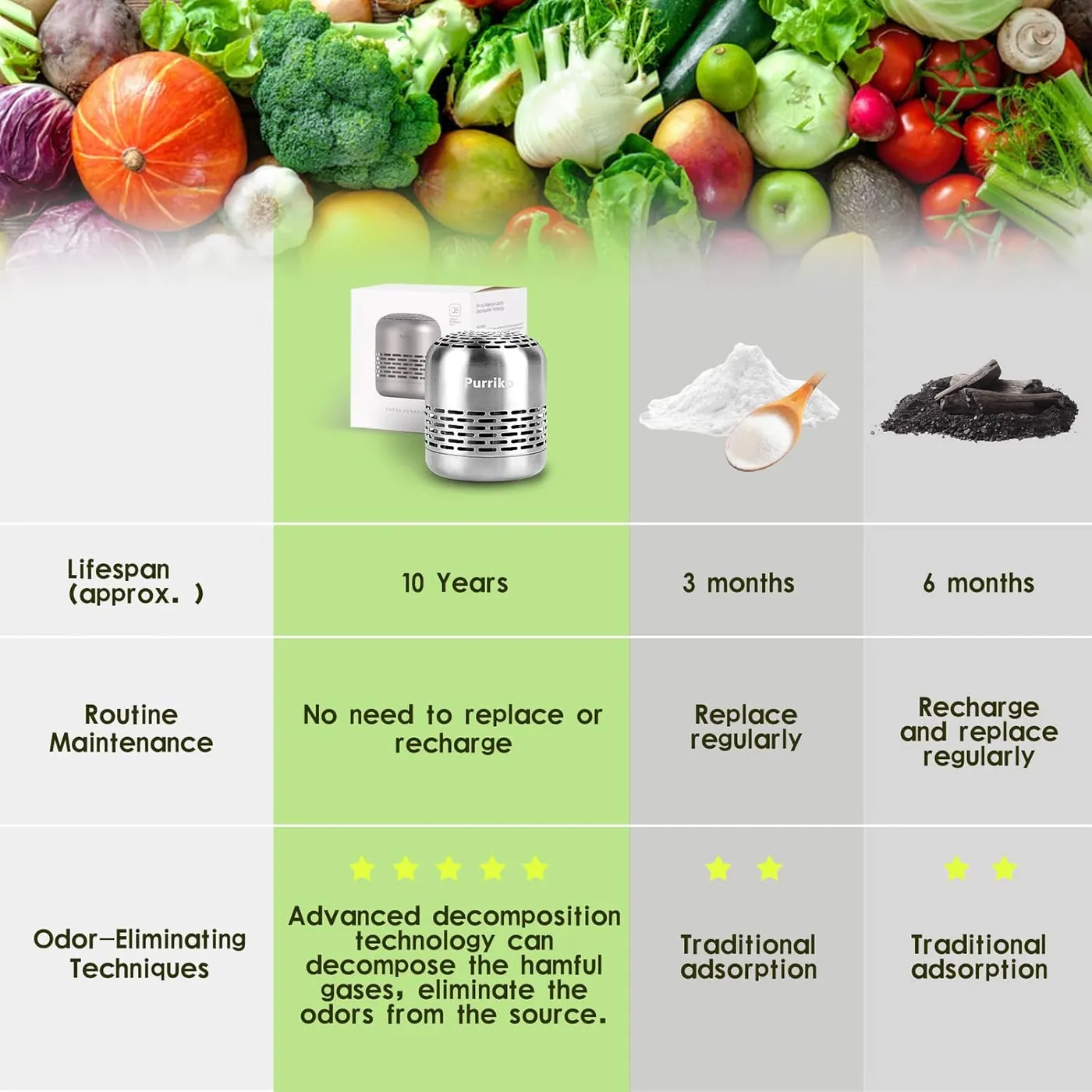
On sticker price, the Purriko Refrigerator Deodorizer is a step up from an open box of baking soda. It's roughly comparable to a multi-pack of bamboo charcoal bags. On cost-of-ownership across a few years, the picture shifts significantly in its favor. Provided, of course, you actually get a year or more out of it.
Baking soda needs replacement every 30 days to stay at full effectiveness. In practice, most people change theirs every two or three months. That's why their fridges eventually carry that settled background smell. Bamboo charcoal bags last longer but require monthly sun-recharging. They still need replacement annually. An activated charcoal unit like Bad Air Sponge handles chemical odors well. But it wasn't really designed for food environments. It tends to carry a chemical smell of its own.
Against any of those baselines, a Purriko unit that runs 12 to 18 months wins. It doubles or triples the typical replacement interval. Against baking soda specifically, the Purriko wins again. Replace it yearly for five years. That still costs less than changing a baking soda box every two months. And you avoid having to remember the swap in the first place. The math breaks down only in two scenarios. Either the unit fails in the first three months, or it never worked for that household to begin with. Both are real possibilities. Both end with a buyer feeling they overpaid for a stainless steel paperweight.
Who should buy it
The Purriko Refrigerator Deodorizer is a strong fit for anyone who's tried baking soda and bamboo bags. Especially if their fridge still smells off. It's particularly good for homes with strong-smelling ingredients. Fish, aged cheeses, fermented foods, leftover cruciferous produce — all categories where passive absorbers run out of capacity quickly. Kitchens where aesthetics matter enough to skip the cardboard-box approach are another obvious audience. So are households trying to simplify their appliance count rather than add more smart gadgets.
It's a weaker fit for buyers who need a guaranteed solution rather than a probable one. The minority of non-response cases is real. There's no way to predict in advance which category a given unit will fall into. Material sensitivity is a small but genuine risk. Off-gassing reactions show up occasionally, particularly with the brushed nickel variant. That suggests material variation between finishes. Households where the existing fridge smell has an identifiable source that hasn't been cleaned up will also be disappointed. No deodorizer on the market will overpower a leaking crisper drawer or a forgotten science experiment in the back corner.
Pros: What we liked
- Pro: Clears strong odors like fish, crab, and spoiled produce where baking soda stalls
- Pro: Works overnight for most households — often within hours for the strongest cases
- Pro: No batteries, app, filters, or maintenance steps required after unboxing
- Pro: Looks better than a cardboard box and fits on a fridge shelf without space issues
- Pro: Performs outside the fridge too — bathroom, trash area, microwave all see improvement
Cons: What could be better
- Con: The 10-year lifespan claim doesn't match real ownership — failures at 3 to 12 months show up frequently
- Con: Roughly one in five units shows no effect at all, with no way to predict which will respond
- Con: Sealed design means no way to refresh or clean a unit that's lost effectiveness
- Con: A small but real cluster of units develop an unpleasant smell of their own, either new or as they age
Best For
- Households where baking soda and bamboo bags have stopped keeping up with strong food odors
- Kitchens with fish, aged cheese, fermented foods, or heavy leftover rotation
- Buyers who want a no-maintenance analog solution without app or battery dependency
- Anyone who wants a fridge accessory that looks presentable on an open shelf
Not Ideal For
- Buyers expecting a decade of use on a single purchase
- Anyone needing a guaranteed-to-work solution rather than a high-probability one
- People sensitive to off-gassing from new metal products
| Specification | Details |
|---|---|
| Odor Removal Method | CH-Cut Catalytic Decomposition |
| Material | Stainless steel |
| Dimensions | 2.67" D × 2.67" W × 3.14" H |
| Weight | 130 g |
| Power Required | None |
| Claimed Lifespan | Up to 10 years |
| Realistic Lifespan | ~1–2 years per longer-term ownership data |
| Coverage Area | Single refrigerator or freezer compartment |
Alternatives Worth Considering
Final Verdict
The Purriko Refrigerator Deodorizer earns its Amazon's Choice badge on a simple test. It works faster and more completely than baking soda for most buyers. And it looks significantly better doing it. Where the product oversells itself is the 10-year lifespan. Real-world owner data puts the realistic number closer to one or two years. A small minority of units show up underperforming from day one. Price it against that realistic timeline rather than the marketing claim, and it still comes out ahead. Ahead on both performance and total cost. Just don't rely on it being permanent. Budget for a replacement sometime in its second year.
Frequently Asked Questions
Does the Purriko really last 10 years?
The claim doesn't hold up under long-term use. Most units that fail do so between three months and two years. Buy it expecting one to two years of useful life, not a decade.
Does it work better than baking soda?
For most households, yes — it clears odors faster and handles strong smells like fish, crab, and cruciferous vegetables that baking soda struggles with. About one in five units don't deliver the same results.
Can I use it outside the fridge?
Yes. It also works on bathroom odors, trash-can smells, microwave residue, and musty closets. It's the kind of product where one purchase often leads to a second once the fridge results are obvious.
Is there any setup or maintenance?
None. No batteries, no app, no twist-to-activate step. Place it on the shelf and it's working. The absence of any activation step sometimes prompts unnecessary returns — there is nothing to find.
What happens when it stops working?
The unit is sealed and can't be refreshed or cleaned. Once effectiveness drops, replacement is the only option. Some units start to smell bad themselves as they reach end of life.
The Verdict
A legitimate upgrade over baking soda that clears strong fridge odors fast